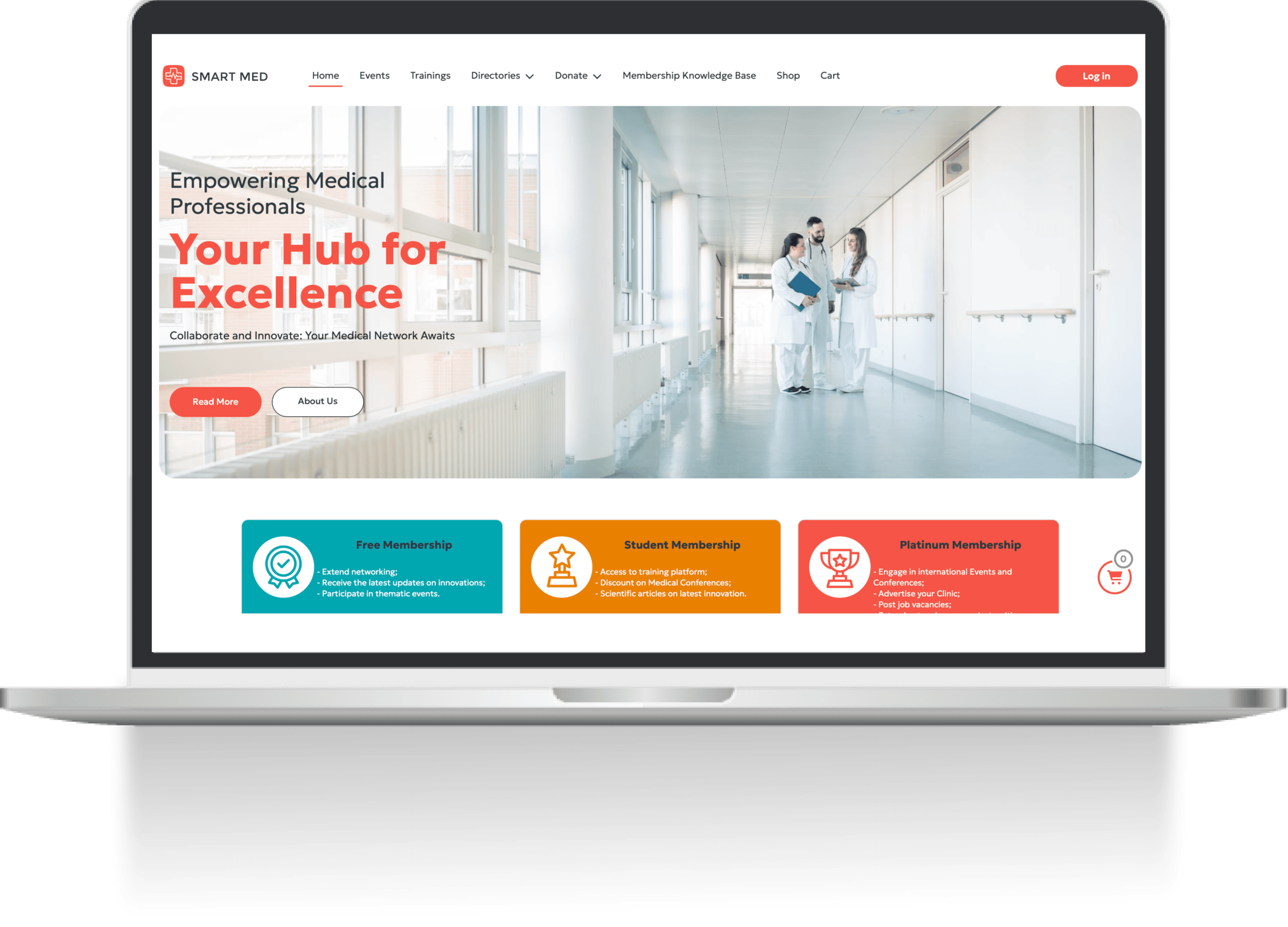



Fundraising used to be a calendar event. Today, it needs to be infrastructure: always on, data-driven, and woven into everything you already know about your members. Most associations juggle more data than they realize. Members register for events, renew dues, open emails, attend webinars, and occasionally donate, but those actions often live in separate systems that never speak to each other. When a development director sits down to plan a fundraising campaign, the preparation work alone can consume days: pulling lists, de-duplicating contacts, and manually cross-referencing engagement history.
Salesforce addresses this not by adding a fundraising module on top of your existing chaos, but by making fundraising data part of a unified picture of every member and donor. The combination of structured data, automation, and, increasingly, AI creates a fundraising operation that can be strategic rather than reactive. Let’s look at what that means in practice in 2026.
Table of Contents
Why Fundraising is Changing For Associations in 2026
Donor expectations have shifted considerably over the past few years. People who give to associations, whether as members, event attendees, or dedicated supporters, increasingly expect the same level of personalization they receive from the commercial services they use daily. A generic appeal that could have been sent to anyone reads as exactly that.
Several dynamics are reshaping the landscape specifically for membership-based organizations:
- The member-donor overlap is growing. In many associations, your most engaged members are also your most likely donors. Understanding the full engagement history is now an essential context for any fundraising ask.
- Communication frequency is up, attention is down. Inboxes are crowded. A fundraising email that doesn’t land in the right segment at the right moment is more likely to generate an unsubscribe than a gift.
- Recurring giving is raising the bar on relationship management. As more associations move toward monthly giving programs, the operational requirements for tracking, renewing, and communicating around recurring donations have grown substantially.
- Reporting expectations from leadership have increased. Boards and executive directors want to see ROI on fundraising campaigns, not just totals. That requires connected data between campaign spend, outreach, and outcomes.
The underlying issue in each of these areas is data quality and connectivity. AI tools can help accelerate fundraising work, but only when the data they’re drawing on is organized and complete. We’ll come back to that point when we discuss AI specifically.
What Still Works in Association Fundraising
The fundamentals haven’t disappeared, but they’ve become more dependent on good data and execution. The following approaches continue to produce strong results when done properly:
1. Segmented fundraising campaigns
Sending the same appeal to your entire database remains one of the most common and costly fundraising mistakes. Segmentation (by membership tier, event participation, giving history, geographic region, or engagement score) meaningfully improves response rates.
2. Recurring donation programs
Monthly or annual recurring gifts provide revenue predictability that one-time campaigns cannot. For associations, a small recurring giving program can generate more reliable income than a large annual campaign with unpredictable results. The key is making it easy to set up, easy to manage, and easy to communicate around.
3. Event-based fundraising
Conferences, galas, webinars, and virtual summits remain high-value fundraising moments because they concentrate motivated members in a single experience. Associating a fundraising component with your event, whether through a live appeal, sponsorship packages, or a dedicated giving moment, connects the donation to something tangible that the member just experienced.
4. Donation flows inside the member portal
Friction kills conversion. If a member has to leave your portal, navigate to a separate donation page, re-enter contact information they’ve already given you, and figure out how their gift connects to their membership, you will lose gifts. Salesforce-native membership management features like those in AC MemberSmart allow donation flows to live inside the member experience, not outside it.
5. Impact-based communication
Telling donors what their gift actually funds — a scholarship, a policy initiative, a community program — consistently outperforms appeals that focus only on organizational need. Members want to see the connection between their contribution and a specific outcome. This requires knowing enough about your donor segments to communicate the right impact story to the right audience.
What is Becoming Less Effective
These approaches haven’t stopped working entirely, but their effectiveness has declined, and investing in them at the expense of more structured methods is worth reconsidering:
- Generic mass email blasts. Batch-and-blast fundraising to your full list, with no segmentation and a generic message, produces diminishing returns as deliverability and engagement standards rise.
- Disconnected donation forms. Standalone donation pages that don’t connect to your membership data prevent you from recognizing donors, auto-filling their information, or tracking their giving alongside other engagement.
- Manual spreadsheet tracking. Managing donor records, campaign performance, and follow-up in spreadsheets creates accuracy risks and makes segmentation practically impossible at scale.
- One-time campaigns without follow-up. A single appeal with no acknowledgment sequence, no impact update, and no renewal ask leaves most of the relationship value on the table.
- Post-campaign reporting only. If you only analyze campaign performance after it ends, you miss the ability to course-correct mid-campaign, suppress non-responders, or double down on what’s working.
How Salesforce Improves Fundraising for Associations
The case for Salesforce in association fundraising isn’t primarily about having a better donation form. It’s more about what happens when fundraising data lives in the same system as membership data, event data, and engagement history.
When a donor profile in Salesforce includes not just giving history but also their membership tier, event attendance, email engagement, committee involvement, and renewal status, every fundraising decision improves. You know who to contact, with what message, at what moment, and through which channel. That’s qualitatively different from working with a donation database that knows nothing about the person beyond what they’ve given.
Importantly, Salesforce’s fundraising capabilities compound over time. The more consistently your team captures data (donation sources, event connections, communication preferences), the more useful that data becomes for future segmentation and AI-assisted analysis. An organized membership database is the main prerequisite for everything else on this list.
Where AI Can Help Fundraising Teams
There’s a lot of noise around AI in nonprofit and association fundraising right now. The realistic picture is more measured: AI can meaningfully reduce repetitive analytical work and surface insights that would be slow to find manually, but it requires clean, structured data to do so. Used on messy or incomplete records, AI recommendations are unreliable.
Here’s where AI is adding genuine value for association fundraising teams in 2026:
- Identifying likely donors. AI models trained on engagement patterns can surface members who resemble your strongest past donors, flagging people who have never given but whose behavior profile suggests strong giving potential.
- Summarizing engagement history. Rather than manually reviewing a member’s record before a solicitation call or email, AI can produce a brief summary: last event attended, membership tenure, open rate, and previous giving.
- Suggesting campaign segments. Based on historical campaign performance, AI can recommend which segments to prioritize for a given campaign type, saving the time of building them from scratch each time.
- Drafting personalized messages. AI writing assistance can generate first drafts of donor communications tailored to segment characteristics, which a human fundraiser then reviews, refines, and approves before sending.
- Spotting lapsed donors early. Rather than identifying lapsed donors after the fact, AI can flag members whose engagement patterns suggest they’re at risk of lapsing before they stop giving.
- Analyzing campaign performance. AI can identify patterns in campaign data, such as which subject lines performed, which segments responded, which donation amounts were most common, and surface those insights faster than manual reporting.
Important
None of these AI use cases work well without structured, complete data. If donation records aren’t connected to member profiles, if event attendance isn’t tracked, or if communication preferences aren’t captured, AI recommendations will be low-quality. Investing in AI-powered engagement strategies before organizing your data is working backwards.
Donation Management in Salesforce: What to Track
Many associations track donation amounts and stop there. A well-structured Salesforce setup captures significantly more, and each additional field creates more segmentation and reporting possibilities:
- Donor/member profile
- Donation amount and date
- Donation frequency
- Campaign source
- Event connection
- Payment status
- Recurring donation status
- Engagement history
- Follow-up status
- Tax and receipt details
- Communication preferences
This level of data capture is what enables the kind of stronger member engagement that moves occasional donors toward recurring giving relationships.
Key Fundraising Reports Associations Should Review
The following reports should be available to your fundraising team on an ongoing basis, not just after a campaign ends. Salesforce dashboards make it possible to review these in real time:
| Report | What it shows | Why it matters |
|---|---|---|
| Total donations by month | Aggregate giving volume over time | Reveals seasonal patterns and baseline trends to plan against |
| Donations by campaign | Revenue and response rate per campaign | Shows which campaigns generate the best ROI and should be repeated |
| Recurring donations | Active, paused, and at-risk recurring donors | Helps predict future revenue and flag accounts needing attention |
| Lapsed donors | Donors who haven’t given within a defined window | Enables proactive re-engagement before donors fully disengage |
| Event fundraising revenue | Donations attributable to each event | Quantifies the fundraising value of your events program |
| Donation conversion rate | Percentage of targeted donors who gave | Core metric for evaluating campaign execution quality |
| Top donor/member segments | Which membership segments give most and most often | Informs where to focus major gifts and stewardship attention |
| Failed payments | Recurring gifts with processing failures | Prevents silent revenue loss from payment method issues |
| Follow-up performance | Open and response rates on thank-you and acknowledgment emails | Measures the quality of your donor stewardship operation |
Want to see how these reports work inside a live Salesforce membership environment? Check out AC MemberSmart, which includes pre-built fundraising dashboards connected to your member data.
How AC MemberSmart Supports Fundraising Inside a Membership Ecosystem
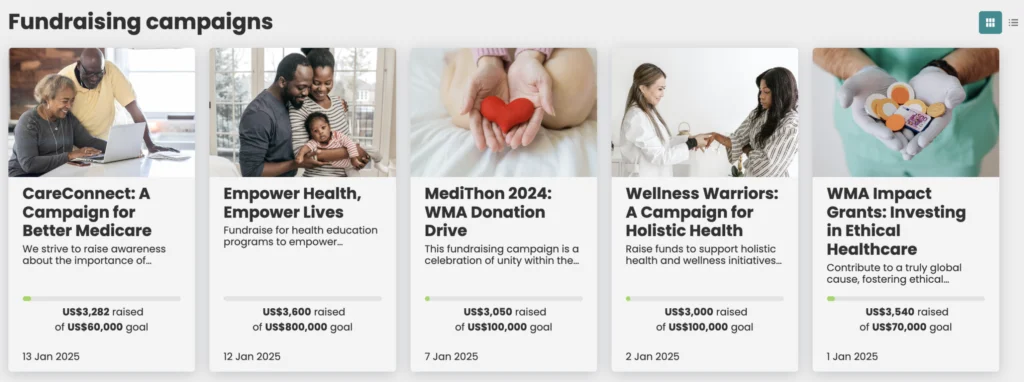
Most fundraising tools are designed to work alongside your member database. AC MemberSmart takes a different approach: it’s built natively on Salesforce, which means fundraising, membership management, payments, events, and reporting all share the same data layer from the start.
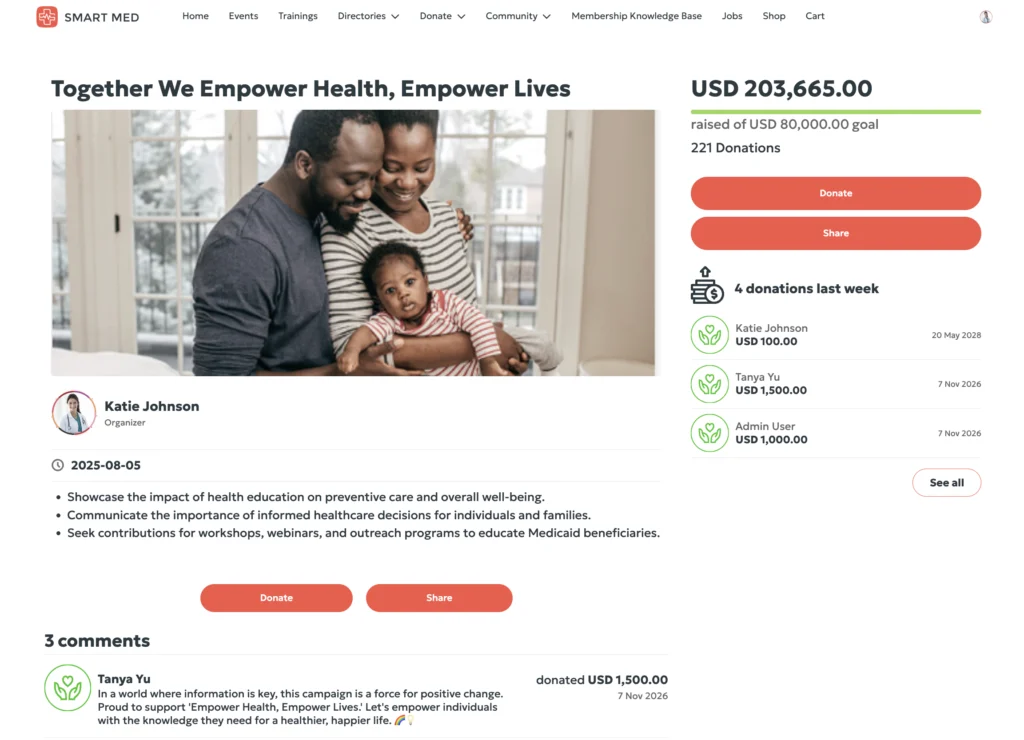
That distinction matters practically. When a member makes a donation through the MemberSmart portal, that gift is immediately visible on their Salesforce record alongside their membership tier, renewal history, event attendance, and communication preferences. There’s no import process, no sync delay, and no reconciliation work. The donation and fundraising capabilities are part of the same object model as everything else.
Specifically, AC MemberSmart supports:
- Fundraising and donations. One-time, recurring in-kind giving flows.
- Payments. Secure payment processing and history.
- Member portal. Donation flows inside the member experience.
- Member data. Unified profiles connecting giving to engagement.
- Events. Event-linked fundraising tracking.
- Reporting. Live Salesforce dashboards for your team.
For associations exploring how to grow membership with Salesforce, the fundraising connection becomes an additional revenue lever within the same system.
Practical Checklist: Preparing Your Association for Salesforce-Powered Fundraising
Before investing in automation or AI-assisted fundraising, these foundational steps will determine whether the effort pays off:
- Clean your member and donor data
- Define your fundraising segments
- Connect donations with member profiles
- Simplify your payment flow
- Set up campaign reports before launch
- Automate thank-you and follow-up messages
- Monitor recurring donations weekly
- Test AI use cases only after the data is organized
Conclusion
Fundraising in 2026 is less about running more campaigns and more about building a system where every campaign is smarter than the last. That means donor and member data in one place, payment flows that don’t create friction, automation that handles acknowledgment and follow-up without manual effort, and reporting that’s live rather than retrospective.
Salesforce provides the foundation for all of that, but only when it’s configured to connect fundraising with the rest of your member engagement data. Organizations that treat donations as a separate function from membership operations will continue to leave capacity on the table.
AC MemberSmart helps associations manage donations, payments, events, member data, and engagement inside Salesforce — all in one place, without any friction. Book a personalized demo to see AC MemberSmart in action.
FAQ
Do we need Salesforce NPSP (Nonprofit Success Pack) to manage fundraising?
Salesforce NPSP is one option for nonprofits, but it isn’t the only path. Association-focused solutions like AC MemberSmart are built natively on Salesforce and include fundraising and donation capabilities alongside membership management, without requiring NPSP configuration. The right approach depends on your organization’s existing Salesforce setup and whether your needs center more on association membership or broader nonprofit programming.
How do we handle donor communication preferences in Salesforce?
Salesforce supports capturing communication preferences at the contact level (email, phone, mail, and frequency preferences). These fields should be surfaced to members through the member portal so they can manage their own preferences, and they should be referenced in every campaign audience build to ensure you’re only contacting people through channels they’ve opted into. Building this into your data model from the start prevents compliance issues and improves deliverability over time.
Can small associations benefit from Salesforce fundraising, or is it primarily for large organizations?
The core benefits, which are connecting member and donor data, automating follow-ups, tracking recurring gifts apply regardless of organization size. Smaller associations often see disproportionate value because staff capacity is limited and manual processes are more burdensome. The initial configuration investment is real, but once the system is set up, a small team can manage a sophisticated fundraising program that would otherwise require several additional staff members.