


Most associations don’t set out to build a fragmented event management stack. It happens gradually: a registration tool here, a payment processor there, a spreadsheet for attendance, an email platform for reminders. Each piece looks reasonable on its own. Together, they create a system where no one can answer a simple question with confidence: did this event actually move the needle for our members?
That’s the real problem with disconnected event tools. It isn’t that they fail to run an event. It’s that they quietly generate manual work, data gaps, and blind spots that only surface when leadership asks for a report, and the numbers don’t add up, or don’t exist at all. This is exactly the gap purpose-built association event management software is designed to close, by keeping registration, attendance, and revenue data in one connected system instead of scattered across standalone tools.
Table of Contents
Why Events Matter So Much for Associations
For most associations, events are one of the clearest expressions of the organization’s value. A well-run conference, chapter meetup, or webinar series builds community, gives members a tangible reason to renew, and creates professional development opportunities they can’t easily get elsewhere. For many associations, events are also a direct revenue line, through registration fees, sponsorships, or fundraising tied to a gathering.
Because events touch so many parts of the member relationship (engagement, retention, revenue, community, growth), how you manage them matters more than it first appears. An event isn’t an isolated transaction. It’s a data point in a longer story about whether a member sees ongoing value in belonging.
What Happens When Event Tools Are Disconnected
The trouble starts quietly. A member registers for a webinar through a standalone platform, and that registration never touches their member profile. The payment lives inside the event tool’s own billing system, disconnected from the association’s broader financial or CRM records. Attendance (who actually showed up, not just who signed up) often isn’t tracked anywhere staff regularly check, so it has zero influence on how engaged that member appears to be.
The operational consequences pile up from there. Staff manually export attendee lists and import them elsewhere, hoping nothing gets missed. There’s no single, reliable history of how a member has participated over time. When someone asks “did this event pay for itself,” the honest answer usually starts with “let me check three different systems.” And post-event follow-up (the part that actually turns an attendee into a repeat participant or a member) becomes generic, because nobody has an easy way to see who this person is or what they care about.
None of this is anyone’s fault. It’s what happens when tools are chosen individually to solve individual problems, without anyone stepping back to ask how they should work together.
The Hidden Costs of Disconnected Event Management
Broken down individually, the costs of a disconnected setup are easier to see and easier to justify fixing.
- Manual admin work. Every export, import, and reconciliation takes staff time that would be better spent planning events or engaging members directly.
- Duplicate or outdated data. Registration, payment, and membership records drift out of sync when they live in separate places.
- Missed engagement signals. A member who attends every event but hasn’t logged into the portal in a year is telling you something. If attendance never reaches the membership record, that signal is lost.
- Poor payment visibility. When event revenue is processed separately, finance and membership teams can’t easily reconcile it with dues or sponsorships.
- Weak reporting. Boards want to know which programs work. Disconnected tools mean reports are assembled by hand, often too late to matter.
- Worse member experience. Members notice when they re-enter information they’ve already given the association.
- Lost revenue opportunities. Without a clear view of who attends what, it’s hard to spot members ready for an upsell, a sponsorship conversation, or a renewal nudge.
None of these costs show up on an invoice. That’s what makes them dangerous — they accumulate as lost time, insight, and revenue never attributed back to the tools that caused them.
Why Event Data Should Be Connected to Membership Data
Event participation is one of the richest engagement signals an association has, but only if it’s visible alongside everything else you know about a member. Consider a few scenarios that play out constantly in disconnected systems, invisibly:
- A member attends every webinar but hasn’t renewed: a renewal opportunity your team never sees coming
- A member registers but never attends: a different signal than a no-show, but treated identically with no follow-up
- A member pays for premium events but rarely logs into the self-service portal: a clue to where they actually engage
- A sponsor or donor shows up reliably at fundraising events: a pattern that belongs alongside their giving history, not siloed in event software
Each of these is a signal that should feed directly into how your team prioritizes outreach and personalizes communication. When event data lives apart from membership data, these signals never reach the people who could act on them. Recognizing patterns like these is a core part of any solid member engagement strategies approach, but it only works if the underlying data is actually connected.
What Connected Association Event Management Looks Like
A connected setup doesn’t require reinventing how you run events; it requires making sure the pieces talk to each other:
- Registration that writes directly to the member’s existing profile, not a separate record
- Payments tracked in the same system as dues, sponsorships, and other revenue
- Attendance tracked automatically and reflected in the member’s engagement history
- Reminders and follow-ups triggered by real member data, not a generic list
- Reporting that shows event performance alongside membership and revenue metrics
- Dashboards that give leadership a real-time view of program performance
This is less about adding features and more about removing the seams that force staff to do the connecting work by hand.
How Salesforce-Based Event Management Helps Associations
Salesforce has become a common foundation for associations because it solves the “one source of truth” problem at its root. When event management runs on the same platform as membership records, profiles reflect real attendance history, payments reconcile against a single ledger, and reports pull from one dataset instead of three exports stitched together in a spreadsheet.
That foundation also makes automation and segmentation genuinely possible. Instead of manually identifying who attended a specific event, a Salesforce-based system can segment them automatically for renewal campaigns, sponsorship outreach, or targeted follow-up. Because the data lives in one place, different teams see the same picture instead of partial views. This is also what makes broader membership sales strategies practical — you can’t sell effectively to segments you can’t see.
How AC MemberSmart Connects Events, Members, Payments, and Engagement
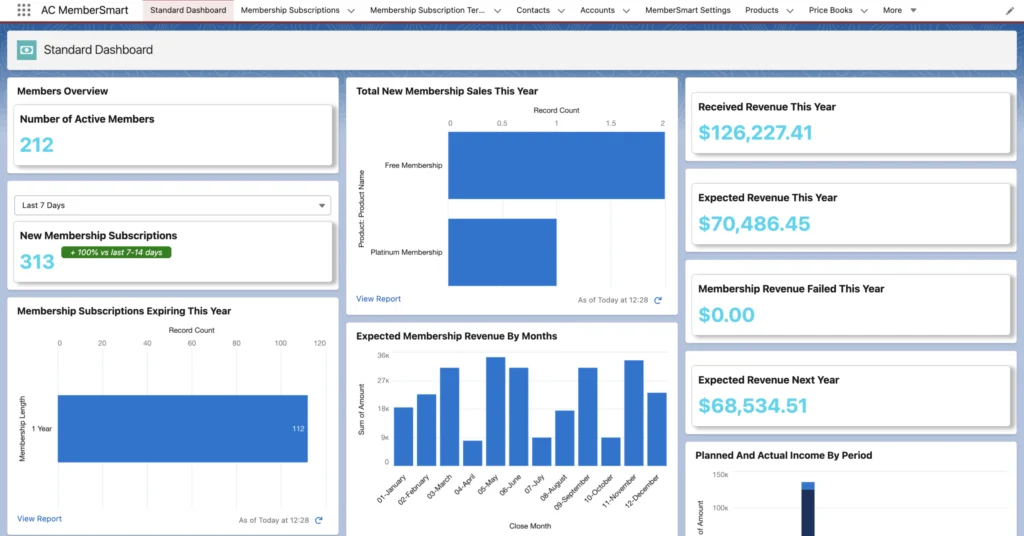
AC MemberSmart is a Salesforce-native association management system built around this idea: event data shouldn’t live apart from the rest of the member relationship. Because it’s built on Salesforce rather than bolted onto it, registrations, payments, attendance, and engagement scoring all flow into the same member record automatically.
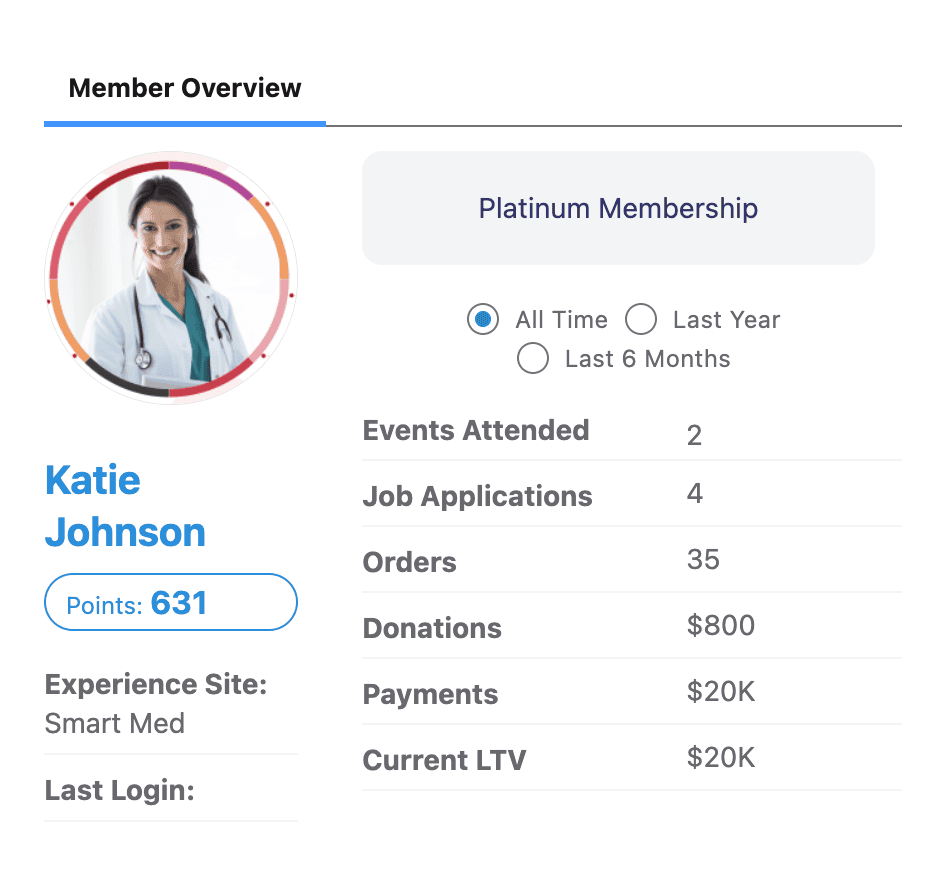
That means an association using AC MemberSmart can see, in one place, that a member attended three webinars this quarter, paid for one premium session, hasn’t logged into the portal since spring, and is due for renewal in sixty days, turning event data into a signal staff can act on before a member lapses, not after.
It also means reporting doesn’t require pulling data from separate systems. Event performance, renewal likelihood, and revenue sit inside the same reporting layer, alongside the broader set of connected membership workflows that Salesforce-native tools make possible. For associations evaluating whether their current stack qualifies as a true association management system or just a collection of point solutions, event connectivity is one of the clearest tests.
If your team is still exporting attendee lists by hand, it’s worth seeing how AC MemberSmart’s Salesforce-native membership management features handle this differently.
Checklist: Is Your Event Management Setup Costing You More Than You Think?
Use this as a quick, honest gut-check with your team as a way to surface where your current setup is quietly generating extra work. Pull in whoever touches events day to day, from registration to reporting, and walk through each question together:
- Do we manually export or import event data between systems?
- Can we see event attendance directly inside a member’s profile?
- Can we track event revenue without pulling data from a separate processor?
- Can we connect event activity to renewal timing?
- Can we segment members based on event behavior?
- Can we automate reminders and follow-up based on real member data?
- Can leadership see event performance reports without manual compilation?
If you answered “no” to more than one or two of these, disconnected tools are likely costing your association more (in staff time, missed signals, and lost revenue) than the line-item cost of the software itself.
Conclusion
Disconnected event tools can look like the cheaper choice until you count the hours spent reconciling spreadsheets and the renewal conversations that happen too late because no one saw them coming. Building event management as part of your membership ecosystem, rather than a separate system entirely, is what turns events into a genuine driver of retention and revenue.
See how AC MemberSmart connects events, members, payments, and engagement inside Salesforce. Book a personalized demo.
FAQ
Why is event data important for member engagement?
Attendance is one of the strongest indicators of how engaged a member is. A member who consistently attends but hasn’t renewed, or registers but never shows up, is telling you something — but only if that data is visible alongside their membership record.
What's the difference between event management software and association event management software?
General event software handles logistics: registration, ticketing, scheduling. Association event management software connects that same logistics to membership records, renewals, and engagement history, what associations actually need to measure impact.
Do small associations need connected event management, or just larger ones?
Disconnection creates the same hidden costs regardless of size. Manual work and weak reporting scale with the number of events, not membership size. Smaller teams often feel the workload most acutely, since there’s no dedicated staff to absorb it.
How does Salesforce help with association event management specifically?
It gives associations a single data platform where member profiles, event registrations, payments, and engagement scoring all live together, instead of being spread across disconnected tools.